 Google Reviews
 Trustpilot Reviews

How to Measure a Classic Watch Strap
Measure the key dimensions of your existing strap or watch in millimetres before selecting a replacement.
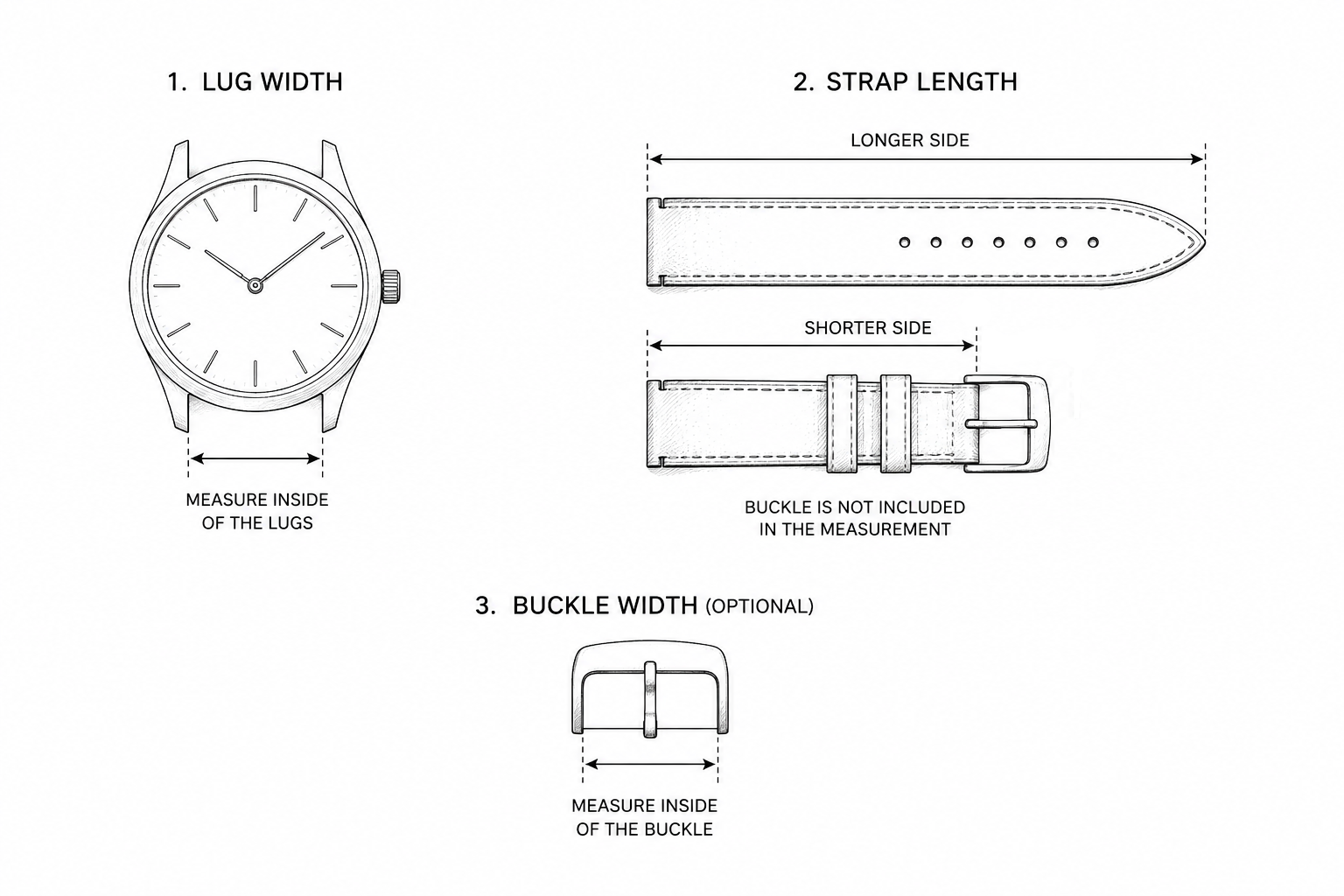
Strap width / lug width
The most important measurement is the width of the strap at the watch end. This is the part of the strap that connects to the watch.
Measure the width of the strap where it fits between the watch lugs, or measure the distance between the inside edges of the lugs themselves.
| Lug width | Required strap width |
|---|---|
| 18 mm | 18 mm |
| 20 mm | 20 mm |
| 22 mm | 22 mm |
If you still have the original strap, check the underside before measuring. Many watch straps have their width or size stamped or printed on the inside.
Buckle width
If you intend to reuse the original buckle, measure the width of the strap at the buckle end.
Many classic watch straps taper towards the buckle. For example:
The buckle width should correspond to the width of the strap at the buckle end.
Buckle prong / tongue width
The width of the buckle prong is also important when fitting an existing buckle to a replacement strap.
Buckle prongs vary in width. Some are relatively narrow, while others are considerably wider. The notch in the strap through which the prong passes must therefore be suitable for the buckle being fitted.
- Buckle width
- Buckle prong / tongue width
- Width of the corresponding notch in the strap
Strap length
A standard watch strap consists of two separate sections: the longer strap section and the shorter section that carries the buckle.
Use a ruler to measure both sections separately.
Strap length is commonly stated using these two measurements. The buckle itself is not included in the strap length measurement.
When replacing an existing strap, measuring both sections of your current strap is usually the most reliable way to determine the correct replacement length.


