 Google Reviews
 Trustpilot Reviews

How to Replace a Classic Watch Strap
A classic two-piece watch strap is normally secured to the watch case with spring bars. Use a suitable spring bar tool and work carefully to avoid damaging the watch case, strap or spring bars.
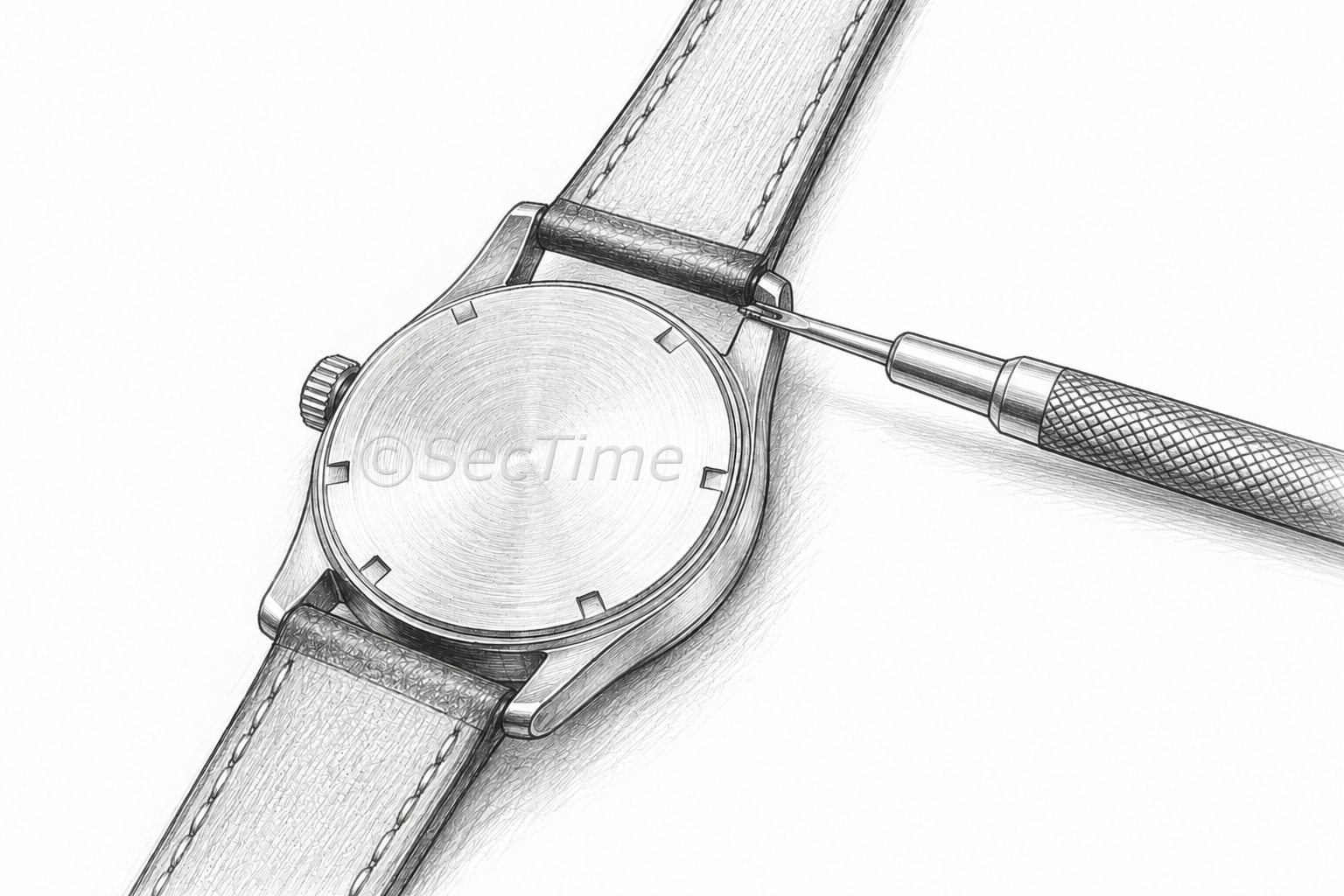
Prepare the watch
Place the watch face down on a clean, soft cloth or watchmaker's mat on a stable surface.
This protects the watch crystal and case while also making small components such as spring bars easier to see if they are released.
- A suitable spring bar tool
- A clean, soft work surface
- The replacement strap
- Suitable spring bars
Remove the old strap
Locate the spring bar between the end of the strap and the inside surface of the watch lug.
Insert the forked end of the spring bar tool between the strap and the lug. Engage the shoulder of the spring bar and gently compress it towards the centre of the strap.
While the spring bar is compressed, carefully move the strap away from the lug until the end of the spring bar is released from its locating hole.
Remove the strap section and repeat the procedure on the opposite side of the watch.
Check the spring bars
Before fitting the replacement strap, inspect the spring bars for bending, corrosion, damaged tips or weak spring action.
If the existing spring bars are in good condition and are the correct size for the watch, they can normally be reused. Replace any spring bar that appears worn or damaged.
The spring bar must be suitable for both the lug width of the watch and the hole or sleeve in the replacement strap.
Position the new strap
Insert the spring bars through the holes at the watch end of both sections of the replacement strap.
On a conventional two-piece strap, the shorter section carrying the buckle is normally fitted to the 12 o'clock side of the watch. The longer section is fitted to the 6 o'clock side.
Fit the new strap
Position one end of the spring bar into the locating hole on the inside of one watch lug.
Using the spring bar tool, compress the opposite end of the spring bar and carefully guide it between the lugs.
Slowly release the spring bar while moving the strap slightly until the spring-loaded tip locates in the opposite lug hole.
A correctly seated spring bar will normally produce a small click or positive engagement as it enters the locating hole.
Repeat the procedure for the second section of the strap.
Check the fitting
Once both sections are fitted, visually check that each end of the spring bar is correctly seated inside the watch lugs.
Gently pull each section of the strap away from the watch case. There should be no movement indicating that a spring bar has failed to engage.
- Both spring bars are fully seated
- The strap is fitted the correct way around
- The buckle section is secure
- Neither strap section pulls free from the watch
Quick-release spring bars
If the replacement strap is fitted with quick-release spring bars, a spring bar tool is normally not required for installation.
Position one end of the spring bar in the lug hole, operate the quick-release lever to retract the opposite end, position the strap between the lugs and release the lever.
Always carry out the same final pull test to confirm that both ends are securely located.


